
/blog
4/277/26
+
*
*
+
A Ford Orion, a Friday night, and 38 years of Sprint Finishing

Stephen Bell
Category
Studio News
Read time
2 minutes
Updated
Jun 11, 2026

The hard work was never the obstacle. It was always the point.
The story of Sprint Finishing begins in a Ford Orion, in 1987.
Steve and his father Tom had just finished the best part of two days' continuous work - a shift that had started Friday morning and run through the night into Saturday afternoon. Both of them were print finishers. Both of them were exhausted. And then Stephen mumbled the words that would change everything.
"We wouldn't work this hard for ourselves."
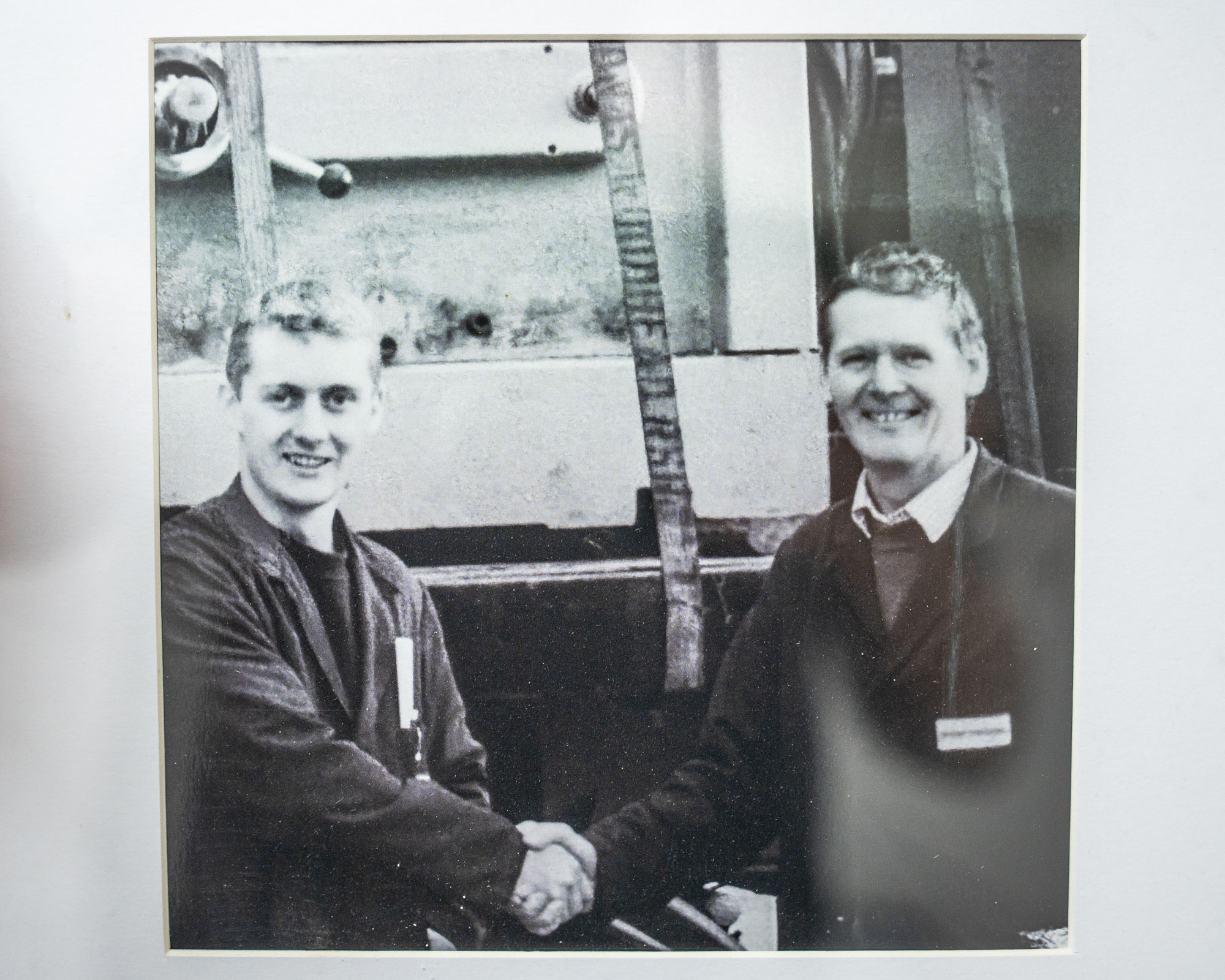
Two generations of the trade
Tom had been in print finishing for most of his working life. After the Merchant Navy and a handful of jobs, he'd ended up at Bowater Packaging in Kent as a machine operator, then worked his way through different companies until he reached Leeds - and eventually a manager's role in York.
Steve had taken a different route to the same place. He'd left school at 16 with - by his own admission - "not an amazing amount of qualifications," wanting to join the Royal Navy like the rest of his family. He didn't have the O-levels for it. So instead he left home at sixteen, and started at a print finisher's in Halifax.
His dad used to come up at weekends to do a bit of moonlighting alongside him. "Just to earn a bit of money, more than the paper round or the milk round." Eventually Tom decided to join Stephen at the same print finishers over in Halifax.
"Which was a complete disaster for me, really, because he ended up in charge and no one would speak to me after that."
It's said with affection, and it's said with a laugh. But out of those weekends and that overlap came something neither of them had quite expected: the discovery that they worked extraordinarily well together.
"That's the recipe of what was required, certainly back then, to do something like that."
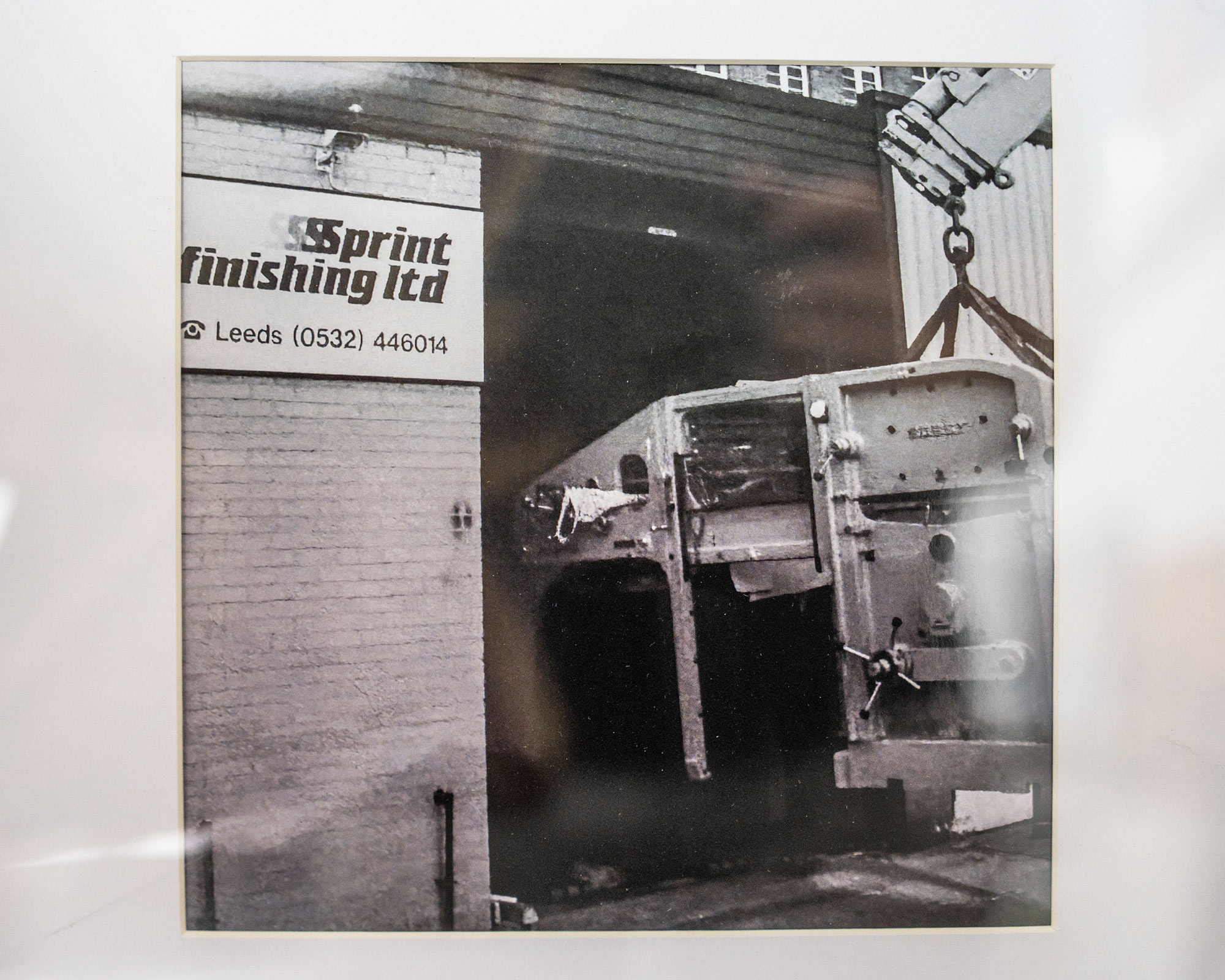
Setting up
The 1987 business plan, Steve admits, "amounted to no more than some kind of homework." But the bank in the 1980s was a different beast. "All you needed was your best suit out of the catalogue and you were offered the money."
The early days were all hands to the pump. "Bursting with energy to try and get this thing started, to prove that we could do this. It was curiosity, it was nerves, it was excitement. We understood even then the task ahead of us - but there was going to be no shortage of hard work, and that was something we weren't scared of."
The name made a promise. Sprint Finishing. Fast.
That speed mattered, because of where Sprint sat in the supply chain. "We were purely print finishers. A customer would want some packaging designed. They'd go to a design agency. The agency would go to a printer. The printer would print it and send it to us - and we'd turn it into the packaging."
"We were the last to get the job and the last to be paid. We were a cog within the tree of packaging."
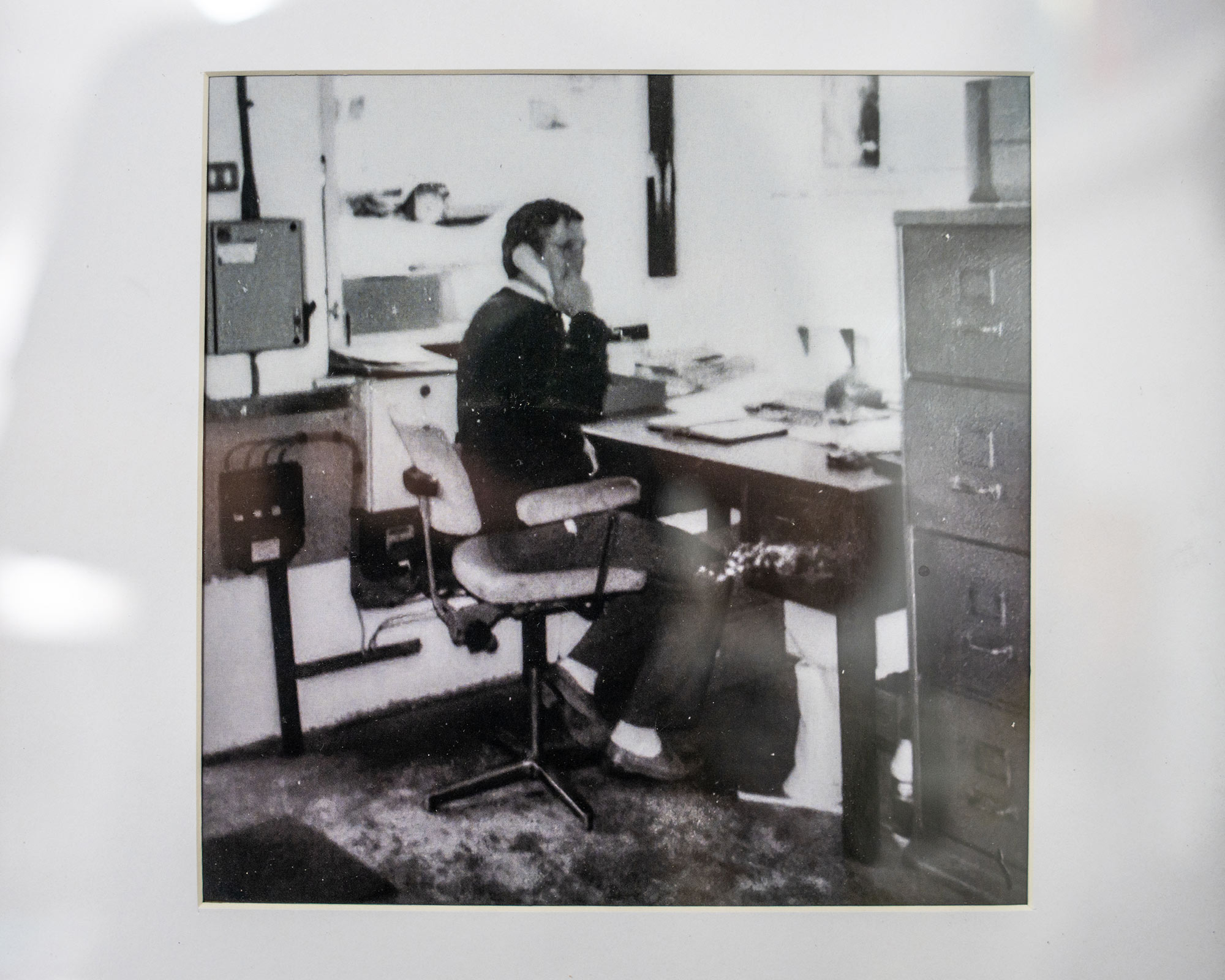
The pivot that changed everything
For the first decade, Sprint never spoke to an end client. Couldn't, really. The printers wouldn't allow it.
"We were stopped at the gate of the printer. You weren't allowed to go any further. They obviously didn't want to give up their customers or their agencies."
Worse, there were people sitting between Sprint and the brands who weren't really doing anything. "We were seeing people turn up in fantastic cars with lots of wealth, making lots of money out of us - and out of the customers we could have been dealing with directly."
Around 15 years into the business - helped, Steve thinks, by the rise of the internet and the new possibility of contacting end users directly - they made a decision.
"We just thought: this is wrong. We need to jump these people. We need to get straight to the end user, where we can do a better job, where we can demonstrate who we are."
It wasn't always easy. "There were so many projects where we were on a wing and a prayer, wondering whether the people we were dealing with were going to survive. There were so many times where we either didn't get paid, or it took so long to get paid."
But the trajectory was right. Working directly with brands meant Sprint could add value where it mattered - at the design stage, at the structural stage, at the moment when a piece of packaging stops being a box and starts being a product. It meant fairer pricing for the client, and fairer pay for the factory.
"There was no alternative. We were never going to go back to dealing with straight printers. We already knew this formula had worked."
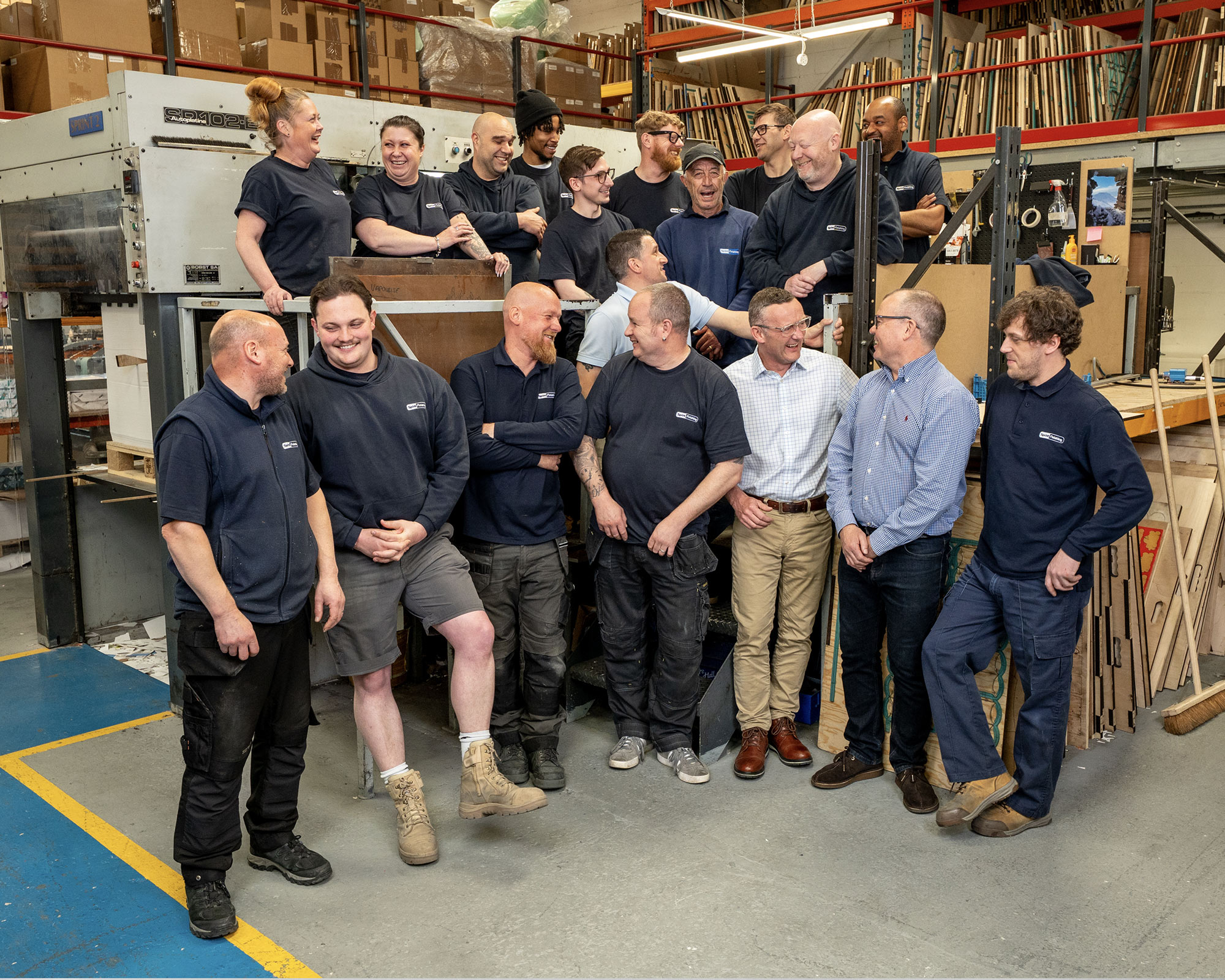
The dysfunctional family
Ask Steve what he's most proud of, and the answer isn't a project or a client. It's the team.
Most of the people on the factory floor have been with Sprint for over 30 years. Nearly every one of them was trained, from scratch, by Steve or his father.
"They're our little creations, that have turned into these amazing men and women that just bring everything, every day, to this company."
He describes colleagues at Sprint as a football team - everyone with their own position, everyone good at what they do, everyone able to overlap beautifully into someone else's territory when needed.
And then, with characteristic honesty:
"We're like this fantastic dysfunctional family who like to argue and bicker sometimes - because they just care so much about what's going on in the factory and whether they're doing the job as good as they're doing their own job."
What makes the team unusual, Steve says, isn't just skill. It's care. "Everyone cares about every job that's in here. Everybody knows virtually every job that's going on, even if it's not in front of them or in their area. That's key to building a brilliant team - they actually care, and know about, nearly every job in the factory."
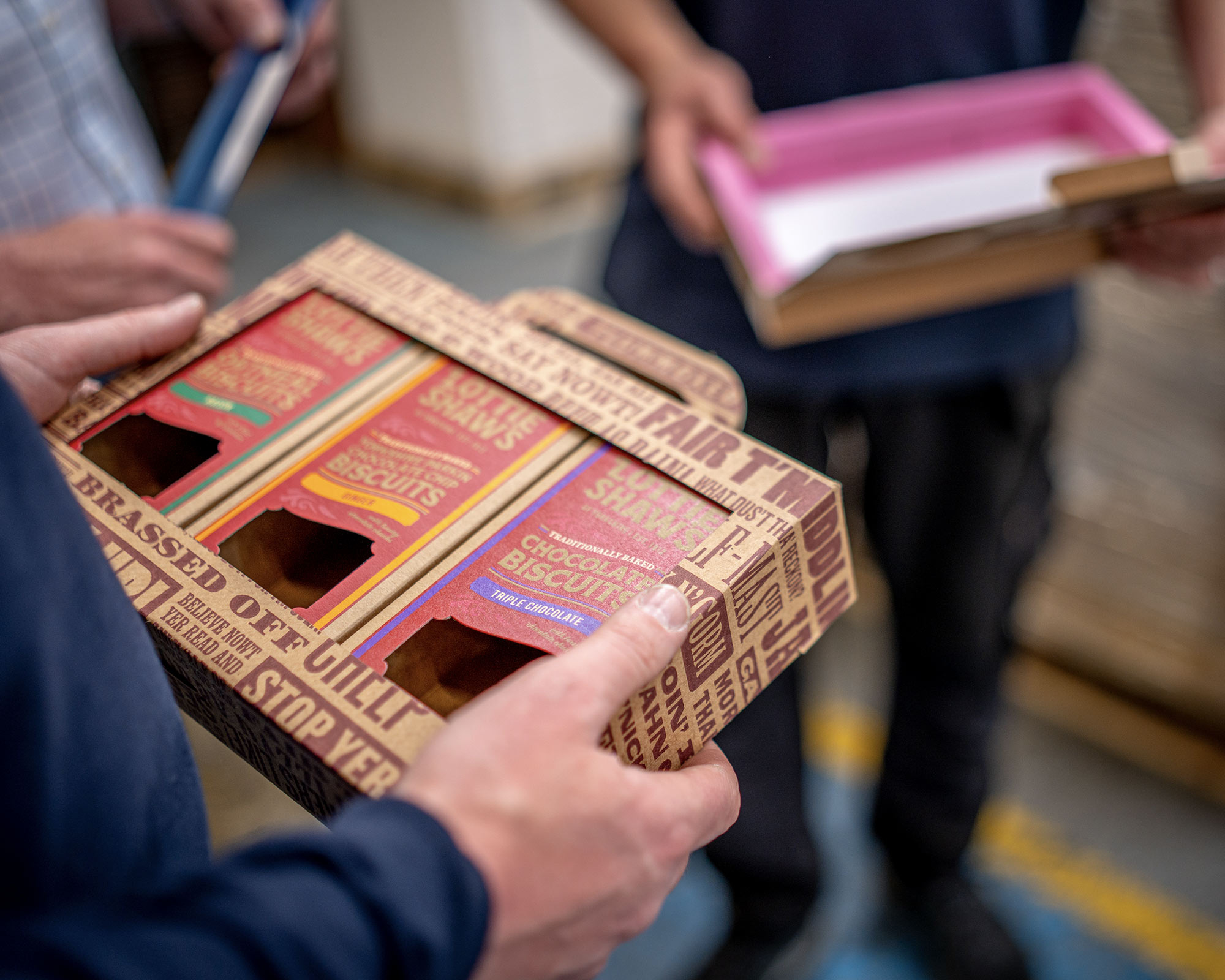
The challenges nobody else will take
Sprint's reputation in the trade has a particular shape: when something difficult comes through the door of another factory, it tends to find its way to Halifax.
"Within the trade, I think we've got a lot of respect. When there are other companies that can't do a job, they usually bring it here."
For years, Steve took those challenges on personally - sat down at the bench, worked them out himself. He's learned, over time, that this was the wrong instinct.
"The staff are that good that we can all get round it. There are a couple of times when I've sat there and said, look - we are the best at what we do. We can fix this. We can solve this problem. We can end this challenge. And we can turn it around."
He recalls one specific job - a snap card of the kind you'd see at Sainsbury's - that arrived as a brief nobody else could crack. The team worked through it together. They solved it. And now it runs through the factory regularly.
"It's a beautiful moment when you solve something, and suddenly it becomes quite normal - and you can apply that to something else later on."
What it's all for
For Steve, the reward isn't the manufacturing. It's seeing the work out in the world.
"When a potential client arrives in front of us, and we say: if we can get this packaging right, your sales will increase. To see it work, regularly, is brilliant."
"Seeing our products on shelves, on Facebook, on adverts - and seeing clients doing really well - makes me feel proud. And I know it makes everybody else in the factory very proud, to see something that we've all produced doing well for somebody else."
Thirty-eight years on from a conversation in a Ford Orion, that's still what Sprint Finishing is for.
The hard work was never the obstacle. It was always the point.
Stephen Bell
Founder


